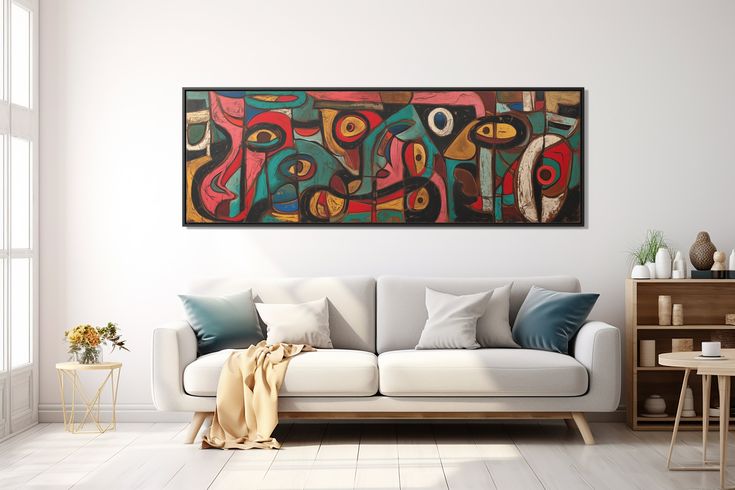
Start with the Space: Purpose and Feeling
Defining the Room’s Mood
First, you must decide on the room’s desired mood before you look at a single painting. For example, do you want the space to feel calm and relaxing (such as a bedroom)? Alternatively, should it feel energetic and stimulating (like a dining room or office)? Ultimately, the canvas art you choose should reinforce that desired atmosphere.
Art as a Focal Point
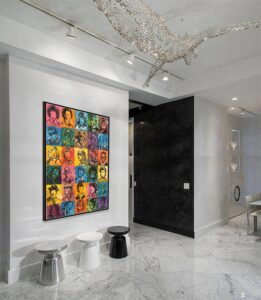
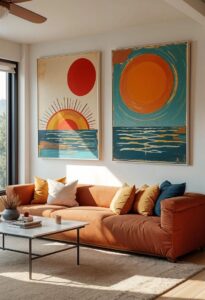

Generally, the canvas art serves as a focal point. Thus, it draws the eye and sets the design tone for the entire wall or room. Therefore, if the room has minimal furniture, a large, dramatic canvas can anchor the space. However, if the furniture is busy, choose a piece that offers a restful, complementary visual element.
Mastering Size and Scale
Height and Eye Level
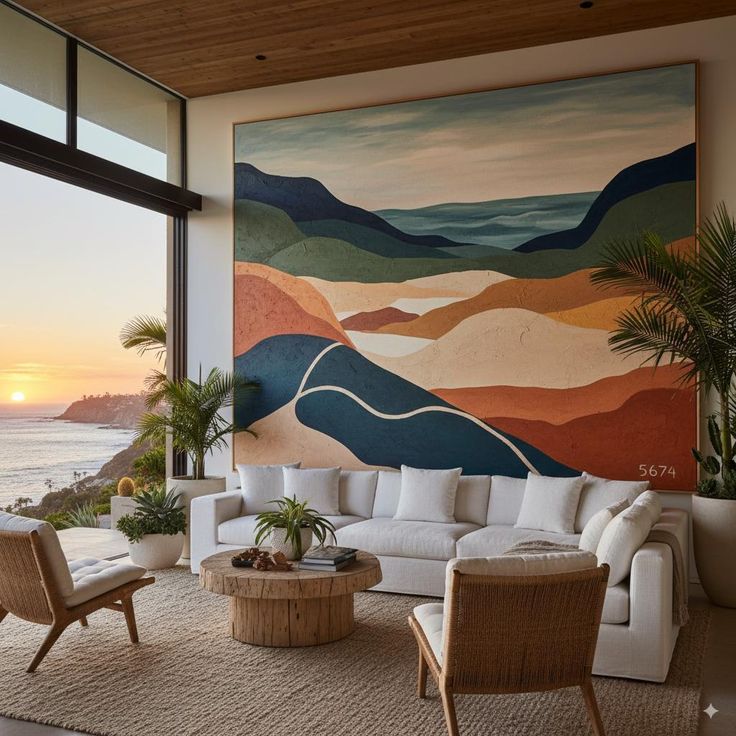
First, when hanging art on an empty wall, the center of the canvas should be at eye level for an average person. Specifically, this means about 57 to 60 inches from the floor. Furthermore, if you hang the art above furniture, ensure there is a comfortable gap. Ideally, this gap should measure 6 to 12 inches between the top of the furniture and the bottom of the canvas.
Groupings and Diptychs/Triptychs
Sometimes, a single canvas is not large enough. Therefore, consider a gallery wall (a collection of different pieces) or a multi-panel piece like a diptych (two panels) or a triptych (three panels).
Furthermore, for multi-panel pieces, you must leave only a few inches of space between the canvases. This ensures they remain visually connected as one piece of art.
Choosing Color and Style
Harmonizing with Existing Color Palettes
Next, look at the existing colors in the room (furniture, rugs, pillows). Consequently, you can choose art that harmonizes by sticking to the same family of colors. This creates a soothing effect. Conversely, you can choose art that contrasts with a few bold colors. Ultimately, this makes the piece truly pop and introduces an accent color.
The Role of Abstract Art Abstract canvas art
Notably, abstract canvas art is highly versatile. This is because it focuses on shape, color, and texture rather than recognizable subjects. Consequently, it works well in modern or minimalist spaces. Ultimately, this versatility allows you to introduce color without clashing with existing thematic details or busy patterns.
Genre and Subject Matter
Above all, the art’s subject should match the room’s function. For instance, serene landscapes or calming, muted abstracts are ideal for bedrooms. In contrast, bold, graphic patterns or bustling cityscapes might work better for an office or living room. Here, you want to foster conversation and energy.
Considering Frame and Finish
Frame or No Frame?
The choice between a framed or unframed canvas dictates the look. Frameless canvases (often called gallery-wrapped) offer a modern, clean look where the image wraps around the sides. A float frame (a thin frame with a small gap between the canvas and the wood) adds sophistication without distracting from the artwork.
Finishes and Lighting
First, consider the finish of the paint (matte, semi-gloss, or high-gloss). Consequently, if the canvas has a glossy finish, be mindful of lighting and potential glare from windows or ceiling fixtures. Therefore, strategic lighting—such as track lighting or a dedicated picture light—can highlight texture and color without causing distracting reflections.
Final Tips for the Savvy Buyer
The “Love It” Rule
Above all, you must ultimately love the art. Indeed, trends and design rules are secondary to your personal connection. Therefore, a piece of art should speak to you and bring you joy every time you look at it. Consequently, always trust your intuition over current design fads.
Test it Out
Before committing to a large purchase, note that many artists or online galleries offer visualization tools. These tools allow you to digitally overlay the artwork onto a photo of your wall. Alternatively, you can use painter’s tape and paper to outline the art’s dimensions directly on your wall. Ultimately, this confirms the size is correct.
Leave a Reply